A Planet-Wide Network Hidden in Plain Sight
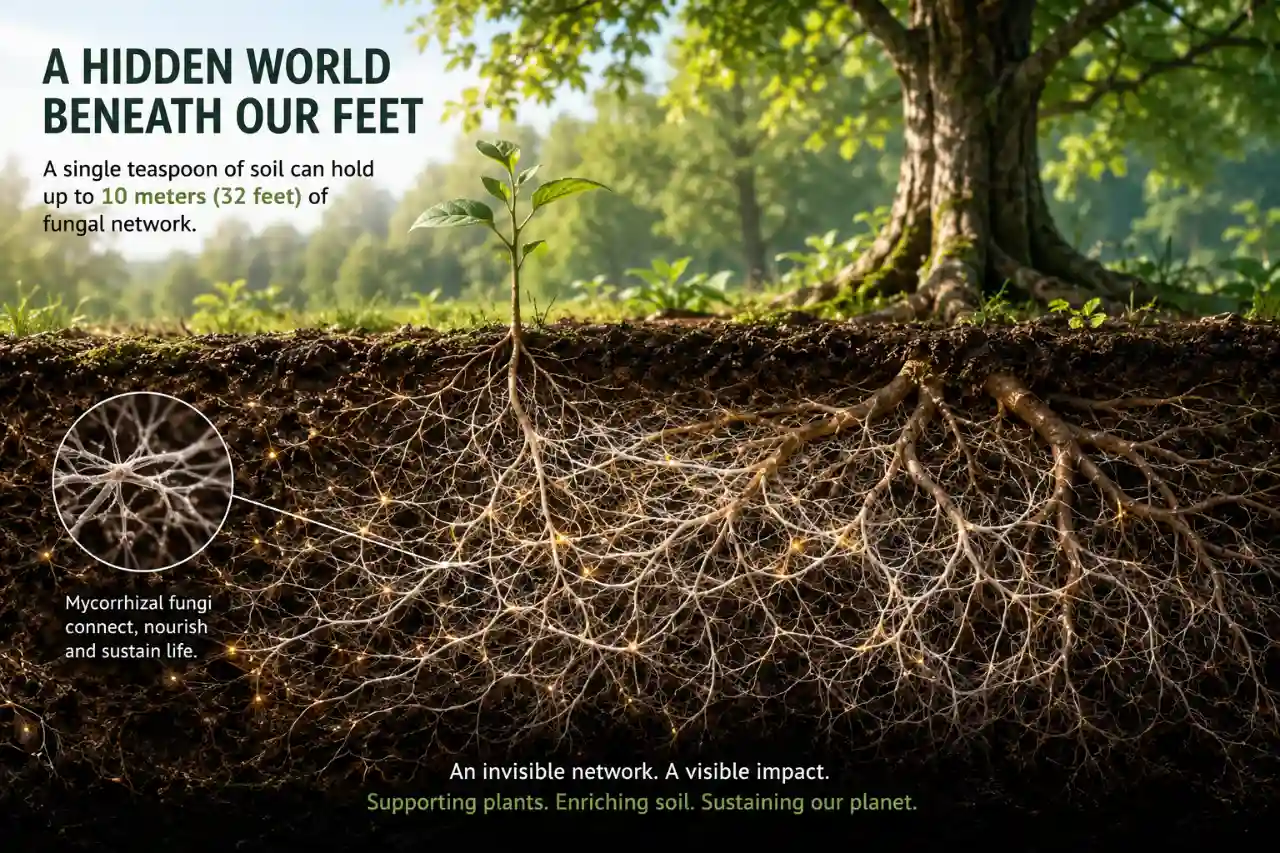
Beneath every forest, grassland, farm, and garden lies an astonishing underground world that most people never realize exists. Scientists have discovered that microscopic fungal threads, known as mycorrhizal fungi, form an enormous living network beneath the soil. In just a single teaspoon of healthy soil, these delicate filaments can stretch for nearly 10 meters (32 feet), creating a dense web that connects plants across the landscape. Although invisible to the naked eye, this underground infrastructure supports much of life on Earth.
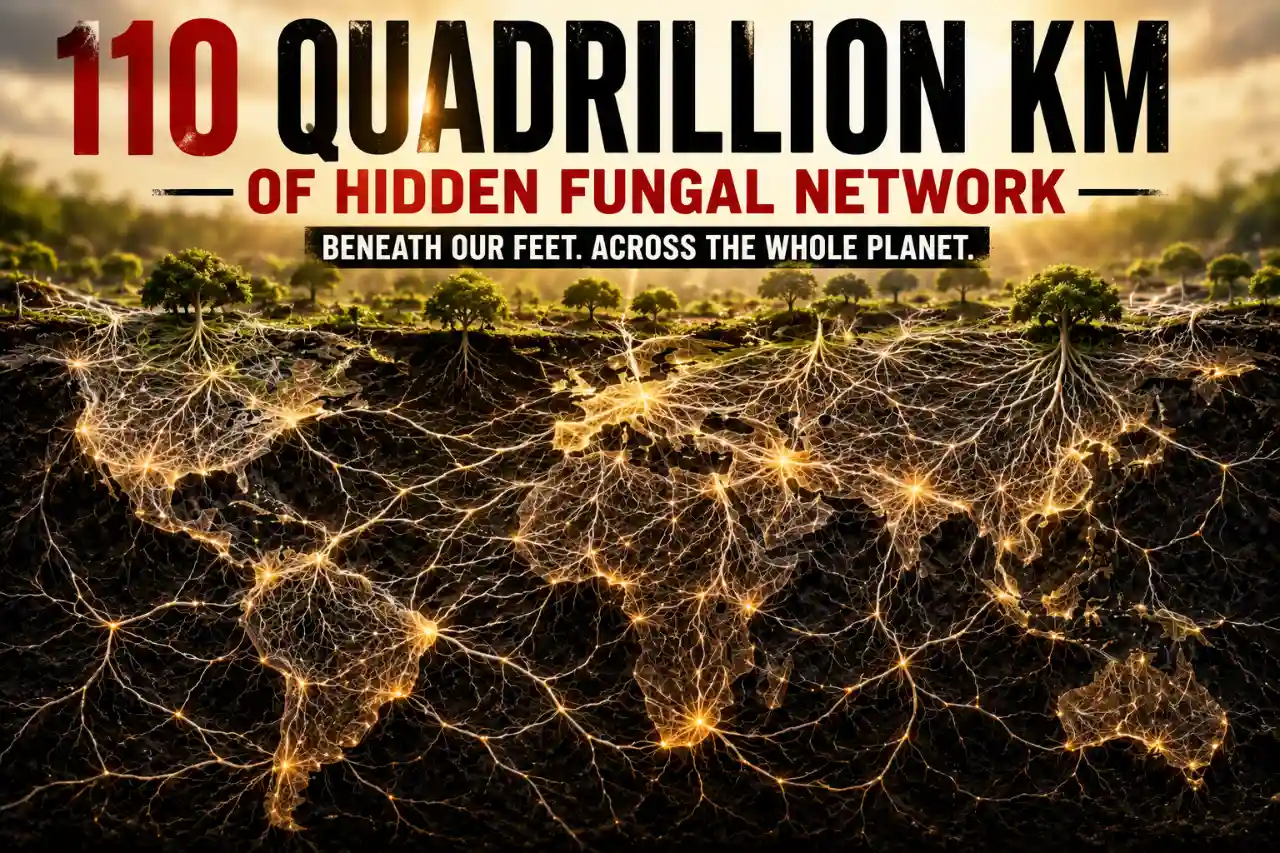
In 2026, researchers from the Society for the Protection of Underground Networks (SPUN) published the first high-resolution global map of these fungal networks through a project called A Hidden Infrastructure. Their findings revealed that the top layer of Earth's soil contains an estimated 110 quadrillion kilometers (68 quadrillion miles) of fungal filaments. If these threads were laid end to end, they would extend nearly one billion times the distance between Earth and the Sun, making this one of the largest living structures ever studied.
Nature's Underground Supply Chain
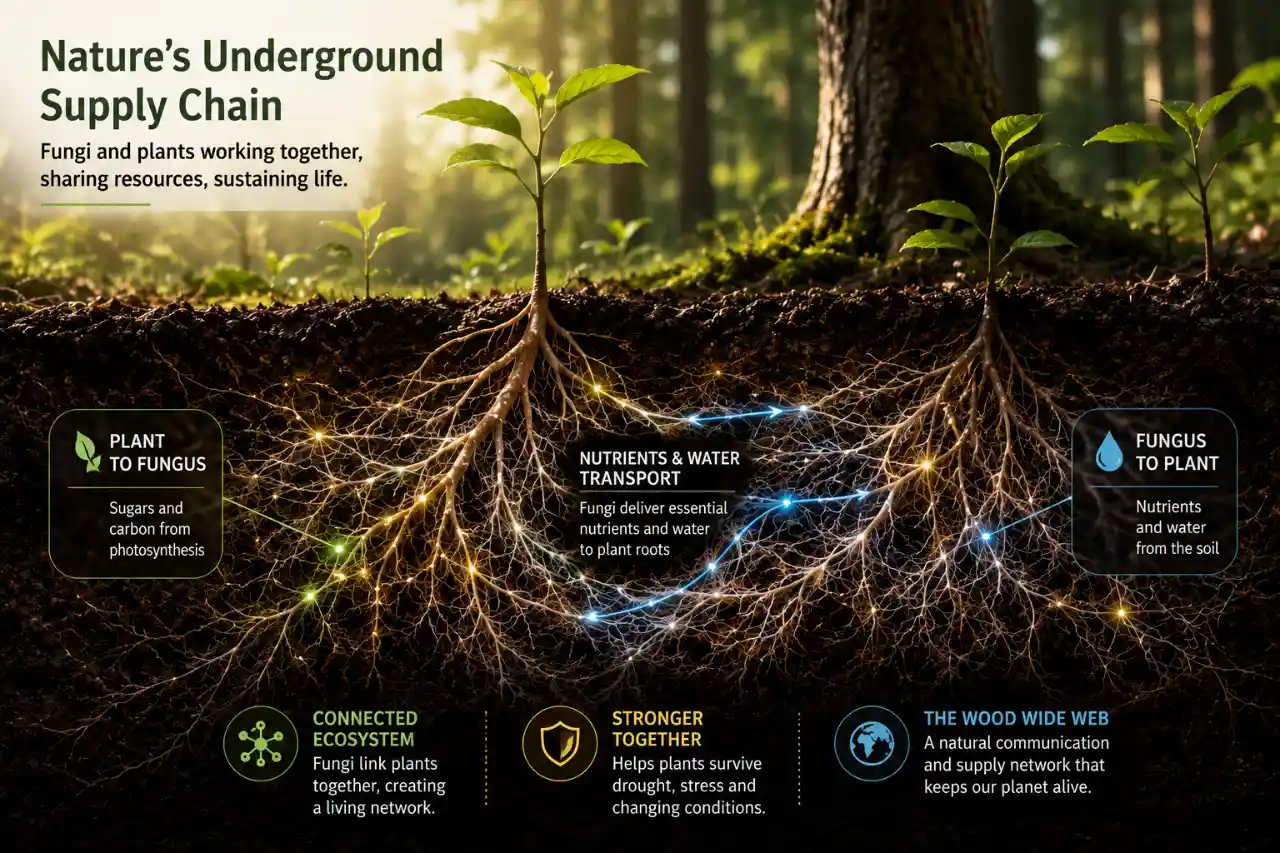
Mycorrhizal fungi live in a remarkable partnership with the roots of nearly 90% of the world's land plants. The fungi absorb water and essential nutrients such as phosphorus and nitrogen from the soil and deliver them directly to plant roots. In return, plants share sugars produced through photosynthesis, providing the fungi with the energy they need to survive. This mutually beneficial relationship has evolved over hundreds of millions of years and remains essential for healthy ecosystems.
Scientists often compare this underground web to a natural communication and transportation network. Through these fungal connections, nutrients, carbon, water, and even chemical signals can move between plants. This hidden exchange system helps plants survive drought, recover from environmental stress, and maintain healthier soils. Because of its ability to connect vast numbers of plants, the network has earned the nickname "Wood Wide Web."
Why Protecting This Hidden World Matters
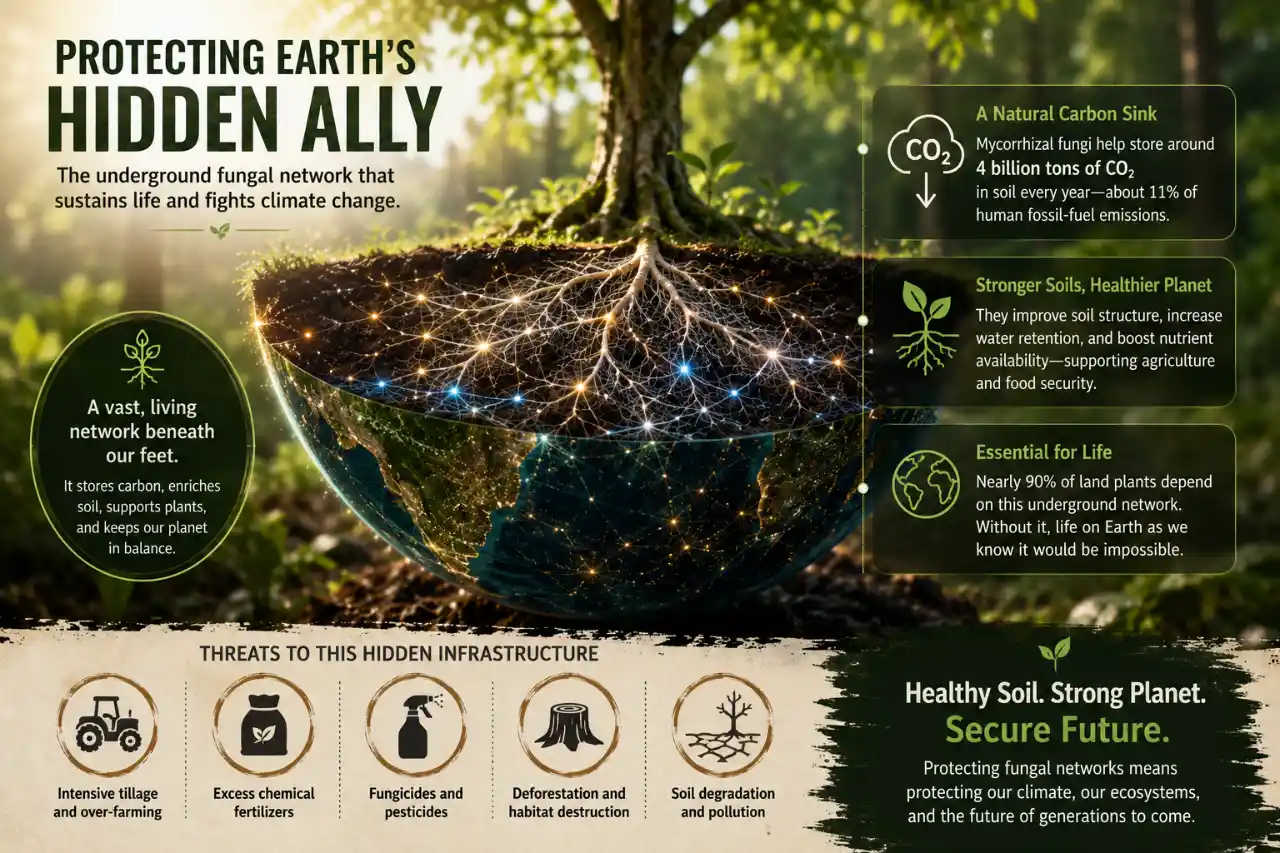
The underground fungal network plays a vital role in regulating Earth's climate. Every year, mycorrhizal fungi help move approximately 4 billion metric tons of carbon dioxide into the soil, representing around 11% of annual human fossil-fuel emissions. By storing carbon underground instead of allowing it to remain in the atmosphere, these fungi act as one of nature's most powerful climate allies while also improving soil fertility and supporting biodiversity.
Despite its importance, this hidden infrastructure faces growing threats from intensive agriculture, excessive tillage, deforestation, habitat destruction, and heavy use of chemical fertilizers and fungicides. Damage to these networks can weaken ecosystems, reduce soil health, and decrease their ability to store carbon. As scientists continue mapping and studying this remarkable underground world, protecting fungal networks is becoming increasingly recognized as a key part of conserving biodiversity, strengthening food systems, and addressing global climate change.