A Fatal Afternoon, a Coerced Child, and a Stolen Youth
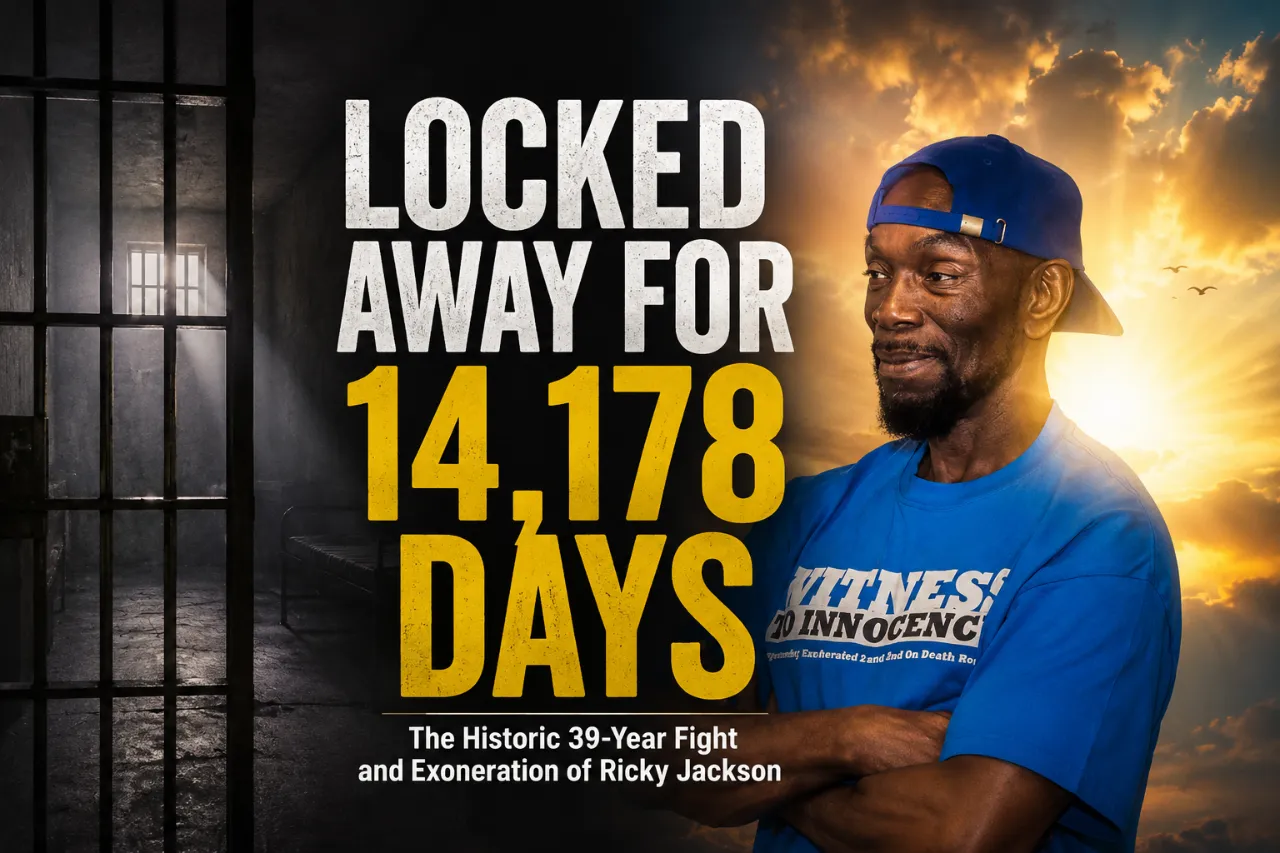
In May 1975, on a routine afternoon in Cleveland, Ohio, a local money order collector named Harold Franks was brutally attacked, robbed, and murdered outside a small convenience store. Within days, three young Black men—eighteen-year-old Ricky Jackson and teenage brothers Wiley and Ronnie Bridgeman (later known as Kwame Ajamu)—found themselves in handcuffs, thrust into the center of a homicide investigation. There was no physical evidence connecting them to the crime scene: no fingerprints, no DNA, no recovered weapon, and not a single trace of stolen money. Instead, the entire weight of the state’s prosecution rested upon the fragile testimony of a single witness—a twelve-year-old boy named Eddie Vernon. Terrified, manipulated, and fed false details by detectives who threatened his family, the young child pointed his finger at Ricky Jackson in court. In an instant, the judicial machine slammed shut. Ricky was convicted of aggravated murder and sentenced to death by the electric chair. At just eighteen years of age, before he had even had the chance to discover who he was, Ricky was stripped of his freedom and condemned to die in a cage for a crime he had never witnessed.

Four Decades in the Shadow of the Electric Chair
Although a 1978 legal procedural ruling declared Ohio’s death penalty framework unconstitutional and spared Ricky from execution, his relief was swallowed by the grim reality of a life sentence. Days blurred into agonizing years, and years steadily turned into decades inside maximum-security prisons. As the world outside shifted dramatically—the fall of the Berlin Wall, the rise of the digital age, and the slow passing of beloved family members—Ricky remained trapped in an unchanging concrete cell. Yet, against all odds, he fought against the poison of bitterness, choosing instead to read, educate himself, and quietly uphold his absolute innocence.
The Historic Exoneration and the Triumph of Grace
On November 21, 2014, a fifty-seven-year-old Ricky Jackson walked into an Ohio courtroom to hear the words he had dreamed of for nearly four decades: all charges were formally dismissed. When he stepped through the prison gates into the crisp morning air, he had spent 39 years, 3 months, and 9 days—a staggering 14,178 consecutive days—behind bars, marking what was then the longest wrongful incarceration in modern American history. The world he walked back into was utterly foreign, but his response to the tragedy stunned the world. Instead of seeking vengeance, Ricky extended pure, unconditional forgiveness to Eddie Vernon, publicly acknowledging that the frightened twelve-year-old boy was just as much a victim of police corruption as he was. Today, Ricky Jackson’s journey stands as a searing indictment of the catastrophic human cost of flawed justice, while serving as a timeless monument to human resilience, profound forgiveness, and the indomitable endurance of the human spirit.
Support Writer
References
- The National Registry of Exonerations - Ricky Jackson Case Summary Archive
- The New York Times - Ohio Man Exonerated After 39 Years in Prison (Published Nov 2014)
- Ohio Innocence Project (University of Cincinnati College of Law) - Exoneree Profiles: Ricky Jackson
- CBS News / 48 Hours - The Long Road to Freedom: The Ricky Jackson and Kwame Ajamu Case
- Cleveland Scene Magazine - What the Boy Saw (Investigative Report by Kyle Swenson, 2011)
- Equal Justice Initiative (EJI) - Longest-Serving Death Row Exoneree Ricky Jackson Released
- Associated Press (AP News) - Longest-imprisoned US exoneree Ricky Jackson freed after 39 years