The Ultimate Argument and a Desperate Plan
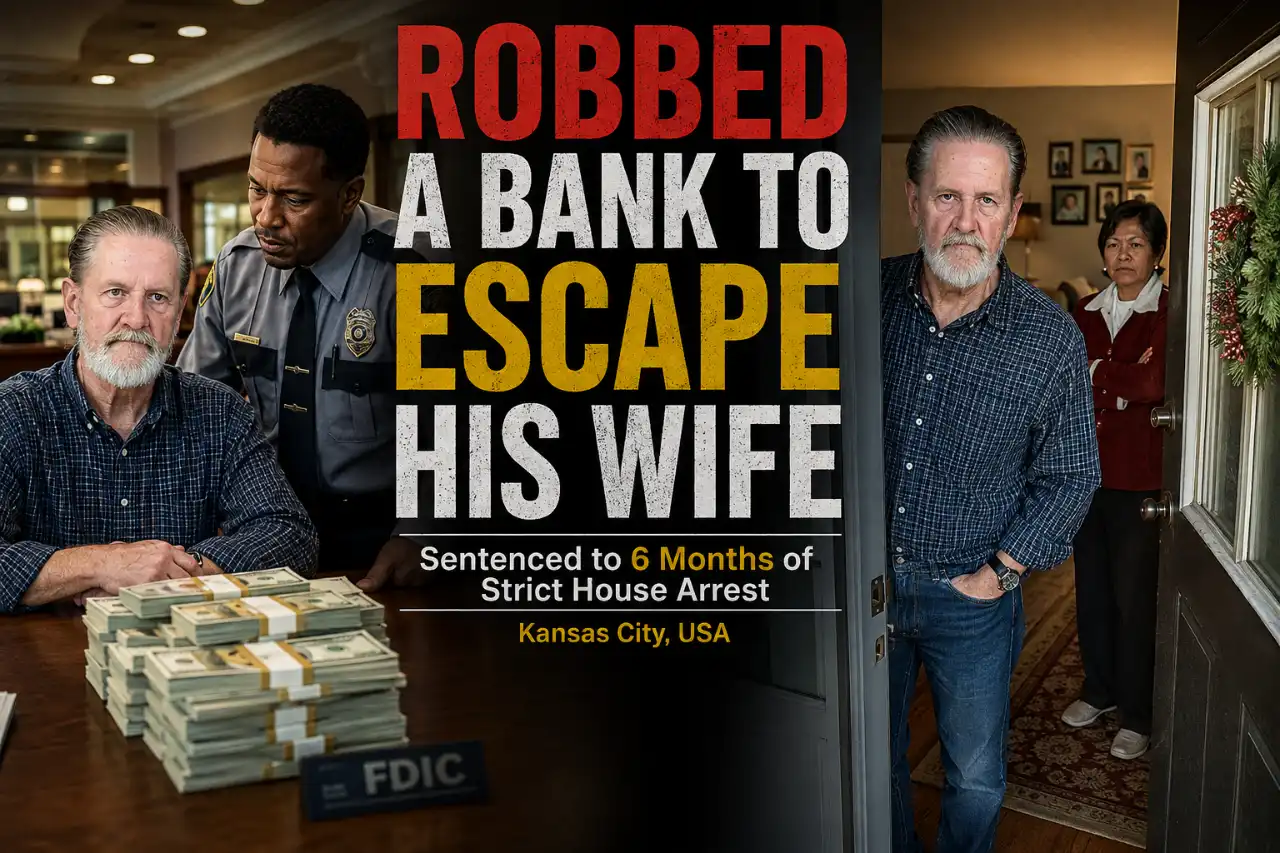
In September 2016, a routine domestic dispute in Kansas City took one of the most bizarre turns in modern legal history. Lawrence John Ripple, a 70-year-old pensioner, found himself locked in a heated argument with his wife, Remedios. Pushed past what he felt was his breaking point, Ripple decided he had finally had enough of married life. Instead of storming out for a walk or driving off to clear his head, he wrote down a dramatic declaration right in front of his spouse, stating that he would rather be in a jail cell than spend another day living under the same roof with her. Determined to make his words a reality, the septuagenarian marched out the front door, walked straight down to the local Brotherhood Bank & Trust branch located on Minnesota Avenue, and stepped into line with an audacious mission. Unlike every other bank robber in history, his goal was not wealth, luxury, or a thrilling getaway; he was simply looking for a quiet, solitary prison sentence that would guarantee complete isolation from his marital home.
The Politer Robbery and the Waiting Room
When Ripple reached the teller window, he calmly slid a handwritten note across the counter. The message was brief and alarming, reading: "I have a gun, give me money." Following standard safety protocols to protect lives, the frightened cashier complied immediately and handed over a stack of cash totaling nearly three thousand dollars. However, the unexpected twist came immediately after the transaction. Instead of bolting out the exit, jumping into a getaway vehicle, or pulling up a hood to blend into the city streets, Ripple calmly took the envelope of cash, turned around, and took a seat on an armchair in the bank lobby. When an armed security guard approached him to investigate the disturbance, Ripple casually pointed out that he was the guy the guard was looking for. Within minutes, local police officers arrived at the scene. Ripple peacefully surrendered the stolen cash without offering a shred of resistance, explicitly telling the arresting officers that he orchestrated the entire heist solely to get locked behind bars and escape his home life.
The Medical Reality and the Irony of the Verdict
As the case moved toward federal court, the bizarre and viral nature of the crime began to reveal a deeper, much more human story. Court records and legal testimony showed that Ripple was not a career criminal, but a man struggling with severe clinical depression following a major quadruple-bypass heart surgery, which had profoundly altered his mood and emotional balance. Both his defense attorney and his wife stood by his side, explaining to the court that the incident was an uncharacteristic cry for help from a sick man rather than an act of malice. While federal bank robbery charges carried a potential penalty of up to twenty years in federal prison, U.S. District Judge Carlos Murguia chose compassion over strict punishment. In June 2017, the judge handed down an ironic yet merciful sentence: three years of supervised probation, fifty hours of community service, and six months of strict home confinement. In an ironic twist of cosmic justice, the man who robbed a bank specifically to get away from his wife was officially ordered by the federal government to stay trapped inside the house with her.
References
- BBC News: US man robbed bank to escape wife, court gives him home confinement
- The Washington Post: He robbed a bank to get away from his wife. A judge sent him home.
- The Kansas City Star: Kansas City man who robbed bank to get away from wife avoids prison
- The Guardian: Kansas man who robbed bank to escape wife sentenced to home confinement
- United States District Court for the District of Kansas Case 2:16-cr-20078-CM
- Reuters: Kansas man robbed bank to get away from wife, sent home by judge