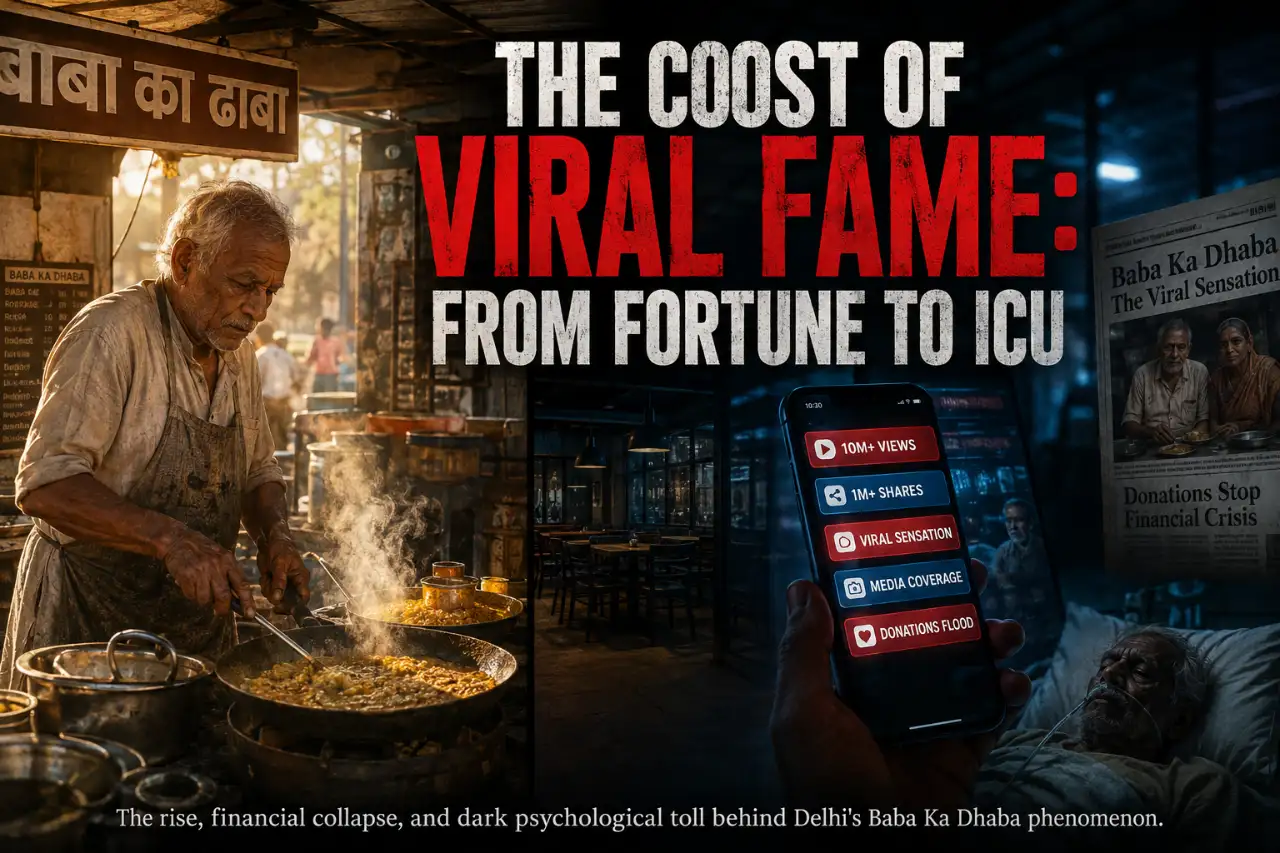
A Heartbreaking Tear and an Overnight Digital Miracle
In October 2020, in a small roadside food stall in Malviya Nagar, New Delhi, an eighty-year-old man named Kanta Prasad sat weeping beside his small cooking pots. Decades of hard work running "Baba Ka Dhaba" alongside his elderly wife, Badami Devi, had collapsed under the heavy economic weight of pandemic lockdowns. On that fateful morning, their total daily earnings amounted to barely seventy rupees—less than a single US dollar. Everything transformed in an instant when a local food creator captured Prasad’s trembling hands and heartbroken tears on camera. The video detonated across the global internet, accumulating tens of millions of views within forty-eight hours as major Bollywood celebrities, international audiences, and food platforms rallied behind the couple. Massive crowds immediately formed around the tiny stall, while private donations poured into bank and payment accounts from generous strangers worldwide, amassing an astounding fortune of over forty-two lakh rupees—roughly fifty thousand dollars. For a brief moment, the internet celebrated what appeared to be the ultimate triumph of digital empathy, turning an invisible, impoverished street vendor into an overnight international folk hero.
The Fractured Dream, Bitter Lawsuits, and a Crushing Downfall
The fairy tale, however, unraveled with devastating speed as sudden wealth clashed with total financial inexperience. Within weeks, bitter public feuds erupted over how the crowdfunding money was handled, culminating in a fierce police investigation and fraud complaints between the stall owner and the creator who initially filmed him. Meanwhile, hoping to secure his family’s future, Prasad invested five lakh rupees to open a modern, sit-down restaurant in the neighborhood. Yet running a high-overhead commercial business proved radically different from operating a humble sidewalk kitchen. Monthly operational expenses, staff salaries, and rent soared above one lakh rupees, while revenue barely generated a fraction of the costs. Within less than three months, the dream collapsed under mounting losses, forced liquidation of equipment for pennies on the dollar, and bitter familial conflict. Defeated, exhausted, and financially drained, the elderly couple had no choice but to shut the restaurant doors forever and walk back to their modest roadside stall, earning only modest pocket change once again.
The Brutal Backlash and the Fragile Cost of Fleeting Fame
The return to the sidewalk unleashed a psychological storm far worse than poverty. The very same digital audience that had glorified Prasad overnight turned violently hostile, labeling the bewildered old man ungrateful and greedy in an avalanche of online hate. Overwhelmed by deep depression, relentless cyberbullying, and profound financial ruin, Prasad recorded a public apology in June 2021, only to attempt suicide by consuming sleeping pills and alcohol just days later. Rushed to an intensive care unit in critical condition, his fight for survival exposed the raw, terrifying reality behind viral charity campaigns and unregulated digital benevolence. The tragic saga of Baba Ka Dhaba stands as a powerful cautionary tale for the modern internet age across the Western world and beyond: viral sympathy without structured, long-term support can easily become a destructive curse, proving that weaponized online applause is never a substitute for genuine, sustainable humanity.
References
- The Hindu: Baba Ka Dhaba owner Kanta Prasad attempts suicide, admitted to Safdarjung Hospital ICU
- India Today: The rise and fall of Baba Ka Dhaba, from viral sensation to restaurant closure and ICU battle
- The Indian Express: Delhi Police register FIR after Baba Ka Dhaba owner alleges cheating over donations
- NDTV: From overnight fame to ICU, tracing the timeline of Baba Ka Dhaba owner Kanta Prasad
- Business Today: Why Baba Ka Dhaba owner had to shut his new restaurant and return to roadside stall
- Zee News: Cyberbullying, financial crisis lead Baba Ka Dhaba owner to critical hospitalization