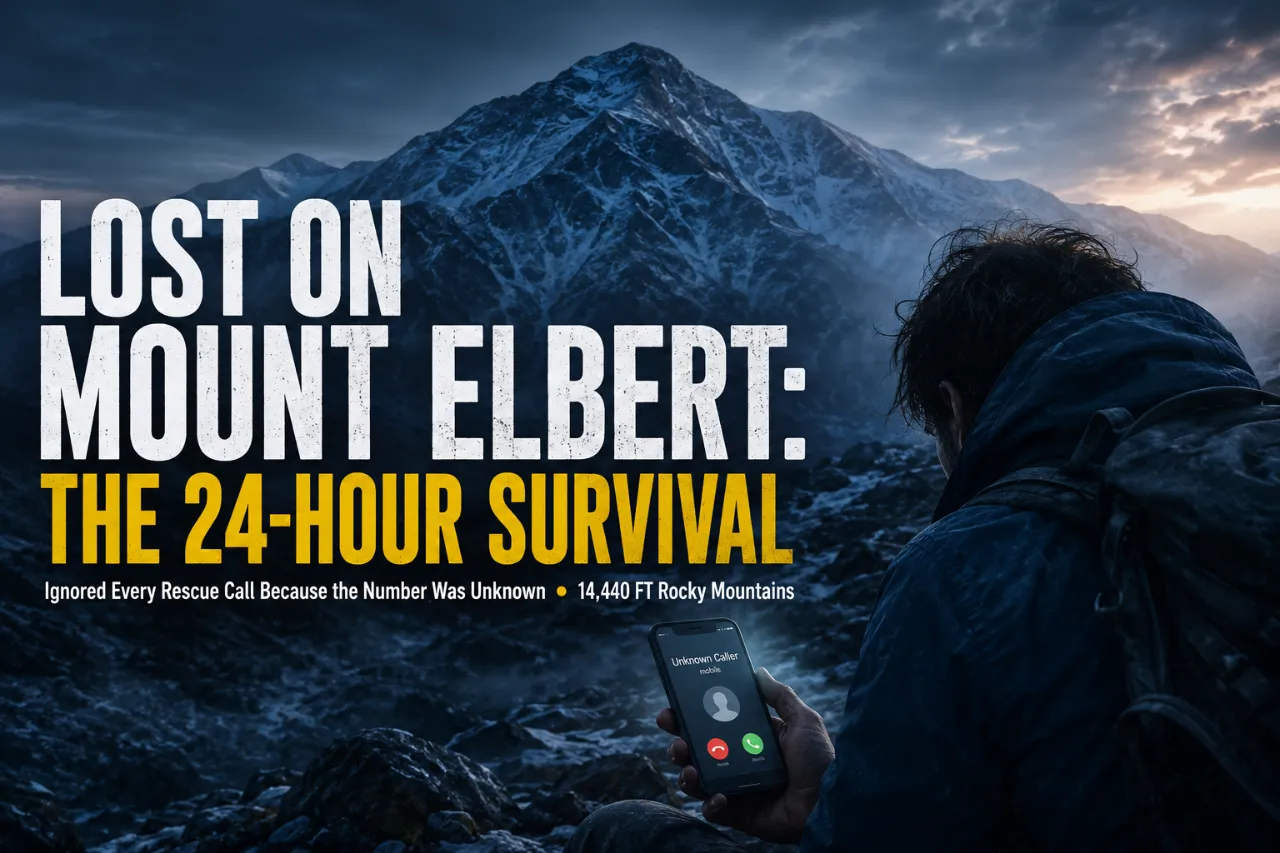
Into the Freezing Darkness of Mount Elbert
On the crisp morning of October 18, 2021, a solo hiker set out from the South Trailhead to conquer Mount Elbert, the highest summit in the Rocky Mountains and the second-tallest peak in the contiguous United States. Standing at an imposing 14,440 feet, the majestic mountain is a dream destination for outdoor enthusiasts across North America and Europe, yet its rugged alpine terrain and rapidly shifting weather can turn even a routine trek into a perilous struggle. What was planned as a standard day hike took a dramatic turn when daylight faded, the sun dipped behind the jagged peaks, and the hiker completely lost the marked trail. As sub-freezing temperatures enveloped the wilderness, darkness settled in, erasing familiar visual landmarks and leaving him totally disoriented. Back at his lodging, growing concern escalated into sheer panic when he failed to return by 8:00 PM, prompting an immediate distress report to the local authorities. The Lake County Search and Rescue (LCSAR) team sprang into action, mobilizing a dedicated crew of five trained volunteers who ventured out into the pitch-black, treacherous wilderness around 10:00 PM. They systematically combed high-risk zones, steep ravines, and known disorientation hotspots where lost hikers frequently wander. Throughout the grueling midnight hours, dispatchers and rescue coordinators repeatedly dialed the missing hiker's cell phone, sending numerous urgent text messages and leaving detailed voicemails, yet every single attempt was met with chilling silence. Unable to locate any signs of life and facing severe cold, the search party temporarily suspended field operations at 3:00 AM, waiting anxiously for daylight to resume the high-stakes rescue mission.
A Desperate Night Hike and the Ignored Lifeline
Unbeknownst to the rescue teams scouring the frigid mountain slopes, the hiker was locked in a relentless, night-long battle for survival. Having realized he had strayed far off course as dusk fell, he spent the entire night pushing through freezing alpine air, navigating unfamiliar ridges, and wandering across dense backcountry terrain in an exhausting effort to locate the South Trailhead. Every step was a gamble between finding the main path and plummeting deeper into the unforgiving wilderness. Meanwhile, deep in his pocket, his phone vibrated multiple times through the night as rescue coordinators frantically tried to establish contact, pinpoint his coordinates, and guide him to safety. However, the hiker never answered a single call. Miraculously, around 9:30 the following morning—nearly twenty-four hours after he had first set foot on the mountain trail—he managed to navigate his way back to his parked car and safe shelter, battered and exhausted but completely uninjured. When rescue coordinators finally debriefed him, they were met with a startling revelation that left the outdoor community completely dumbfounded: the hiker had deliberately declined every single incoming phone call throughout the entire night simply because he did not recognize the unfamiliar local phone number calling him. Having no idea that an official multi-agency rescue operation was underway to save his life, he had routinely dismissed the incoming calls as annoying spam, marketing calls, or unknown telemarketers, never imagining that the ringing phone was actually his dedicated lifeline to safety.
The Modern Dilemma of Panic, Survival, and Empathy
When Lake County Search and Rescue shared the bizarre incident on their official social media channels, the story ignited an instant global firestorm, capturing the attention of hikers and news outlets from the United States to the United Kingdom, Germany, and across Europe. The comment sections were immediately flooded with disbelief, intense debates, and sharp criticism targeting the hiker’s apparent lack of awareness. Many critics could not comprehend how someone stranded in freezing mountain conditions could let unknown numbers ring out without checking. Recognizing the public backlash, the rescue team published a thoughtful, compassionate statement that highlighted the true psychological realities of wilderness survival. They pointed out that when a person is lost, sleep-deprived, physically drained, and battling creeping hypothermia, standard logic often deteriorates. In that high-stress state of mind, common sense dissolves into primal instincts, and what seems like an obvious, rational decision to someone sitting comfortably on a warm couch at home is not always clear to an individual fighting sheer exhaustion on a dark mountain ridge. The incident became a powerful, viral case study in modern outdoor recreation and search-and-rescue communication protocols. Lake County Search and Rescue closed the chapter with a crucial safety reminder for adventurers everywhere: if you ever lose your way on a trail and your phone rings, pick up without hesitation, because that unrecognized number might just be the team braving the cold to bring you back alive.
References
- The Guardian: Lost Colorado hiker ignored rescuers' calls because they came from an unknown number
- CBS News Colorado: Hiker lost on Mount Elbert ignored calls from search and rescue because of unknown number
- Lake County Search and Rescue: Official Incident Report and Public Statement on Mount Elbert Operation
- Global News: Lost hiker on Colorado mountain ignored rescue team's calls from unknown number
- Snopes Fact Check: Did a lost hiker ignore rescue calls because of an unknown number
- The Washington Post: A hiker was lost for 24 hours in Colorado and ignored rescuers' calls from an unknown number