The Accidental Discovery and an 18-Year Obsession
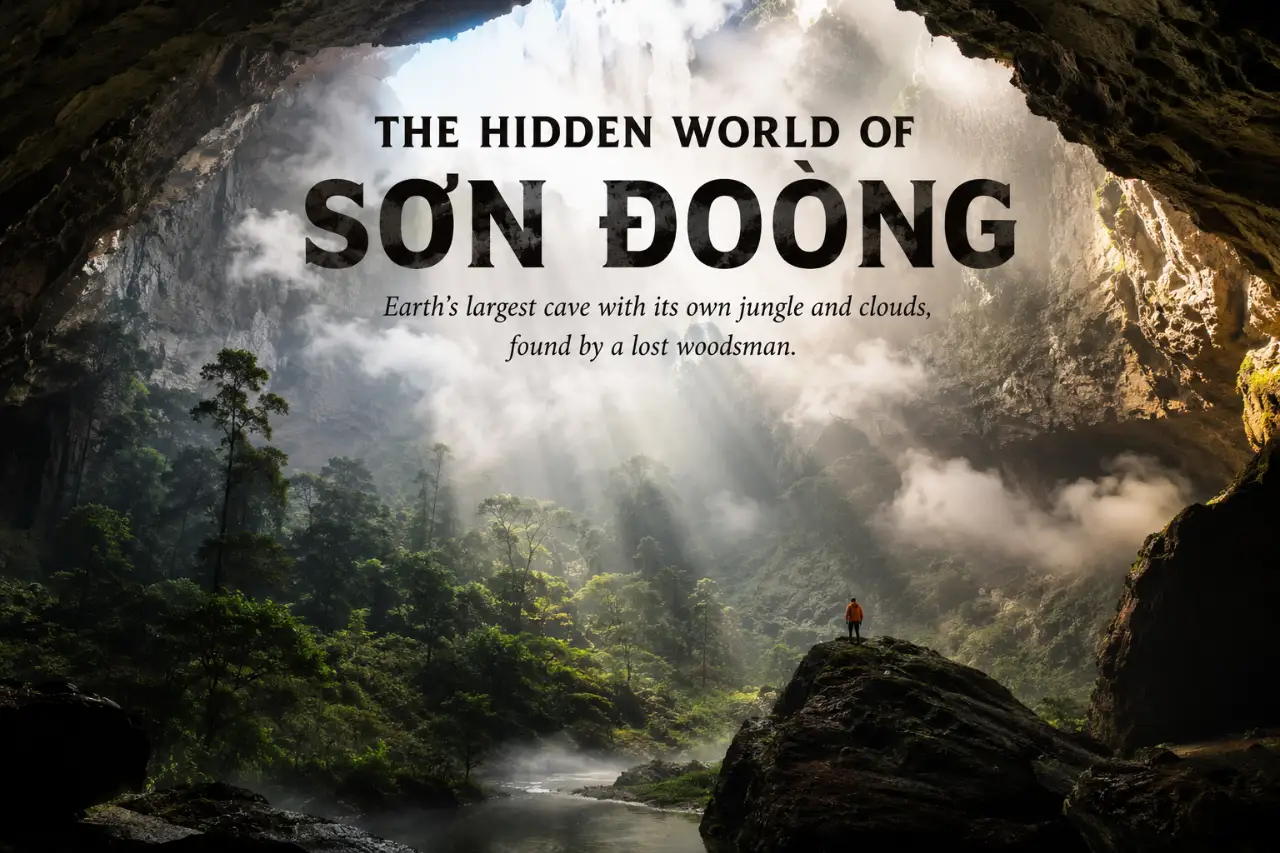
In 1991, deep inside the remote, mist-shrouded limestone karsts of Phong Nha-Kẻ Bàng National Park in central Vietnam, a local woodsman named Hồ Khanh was out gathering timber and foraging for food. Without warning, the heavens opened, unleashing a fierce tropical downpour. Desperate for shelter, Khanh scrambled through the dense, tangled jungle along the Laotian border until he noticed a peculiar limestone opening concealed by hanging foliage. As he stepped closer to the entrance, he was immediately struck by an otherworldly sensation: a strong, ice-cold gust of wind blasted out from the subterranean darkness, accompanied by the muffled, roaring rush of a fast-moving underground river. Terrified by the sheer scale, steep descent, and unknown depths lurking below, Khanh chose not to venture inside. He waited out the storm and returned home. Over the following weeks and months, he tried repeatedly to retrace his footsteps, but the untamed wilderness seemed to have swallowed the opening whole. What followed was an eighteen-year personal quest. For nearly two decades, Khanh searched the jungle relentlessly, convinced of what he had encountered. Finally, in 2008, he relocated the elusive entrance. In 2009, he led a specialized expedition from the British Cave Research Association (BCRA), headed by renowned speleologists Howard and Deb Limbert, straight to the opening, unaware that they were about to rewrite geological history.
Stepping Inside a Colossal Subterranean Realm
When the international expedition descended into the black abyss, they quickly realized they were not exploring an ordinary cavern, but an entirely hidden planet. Officially christened Hang Sơn Đoòng—meaning "Cave of the Mountain River"—the structure was verified to be the single largest natural cave passage on Earth by volume. Stretching over nine kilometers in length, the cave’s primary chamber is so immense that it spans over 200 meters in height and 150 meters in width at its grandest points. To put this staggering scale into perspective, an entire 40-story skyscraper or a Boeing 747 airliner could easily fit within its vast chambers without brushing against the limestone ceiling. The cave’s interior features massive, towering stalagmites rising over 70 meters high, alongside rare fields of baseball-sized "cave pearls" formed over millions of years by dripping, mineral-rich water. Deep inside the darkness lies the "Great Wall of Vietnam," an imposing 90-meter-tall calcite barrier that required world-class climbing equipment and days of technical effort to conquer. The cavern is so vast and complex that walking through its interior feels less like navigating an underground cave and more like exploring a forgotten primeval continent beneath the Earth’s surface.
A Self-Sustaining Ecosystem with Its Own Weather and Jungle
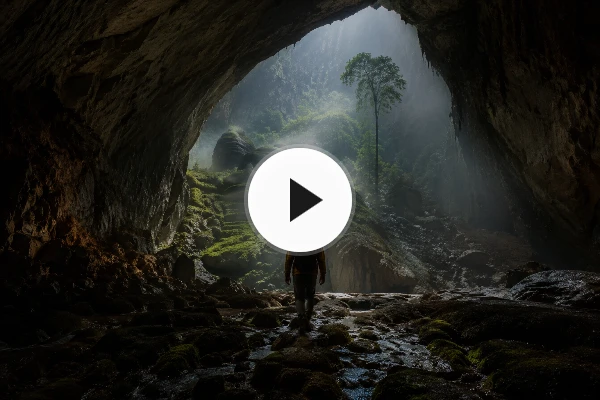
What truly sets Hang Sơn Đoòng apart from any other place on Earth is that it has evolved into its own self-sustaining biosphere. Millions of years ago, sections of the cavernous limestone roof collapsed, creating two colossal open-air skylights known to scientists as dolines. Sunlight and fresh rain poured directly into the heart of the cavern, giving birth to a flourishing, primeval jungle hundreds of feet below ground level. Known today as the "Garden of Edam," this lush underground rainforest boasts trees exceeding 100 feet in height, populated by troops of monkeys, hornbills, flying foxes, and unique cave-dwelling insects found nowhere else on the planet. Furthermore, the convergence of warm, humid tropical air from above with the frigid subterranean river rushing through the cavern creates its own enclosed microclimate. Thick clouds, swirling mist, and localized condensation drift lazily across the upper chambers, forming actual weather patterns entirely independent of the surface outside. What began as a simple attempt by a humble local woodsman to escape a rainstorm ultimately gifted humanity one of its greatest natural wonders, reminding us that even in the modern age, our planet still holds breathtaking secrets waiting in the dark.
References
- National Geographic Magazine, Conquering an Infinite Cave (January 2011 Cover Story)
- British Cave Research Association (BCRA) Expedition Reports 2009-2010 by Howard Limbert
- Guinness World Records, Official Record Certificate for Largest Cave by Volume (Hang Son Doong)
- UNESCO World Heritage Centre, Phong Nha-Ke Bang National Park Property Records
- Oxalis Adventure, Conservation & Official Exploration Records of Hang Son Doong
- BBC Earth Feature, The Secret Rainforest Inside Earth's Biggest Cave
- Smithsonian Magazine, Exploring the World's Largest Natural Cave in Vietnam