A Peaceful Retreat Turns into a Global Tragedy
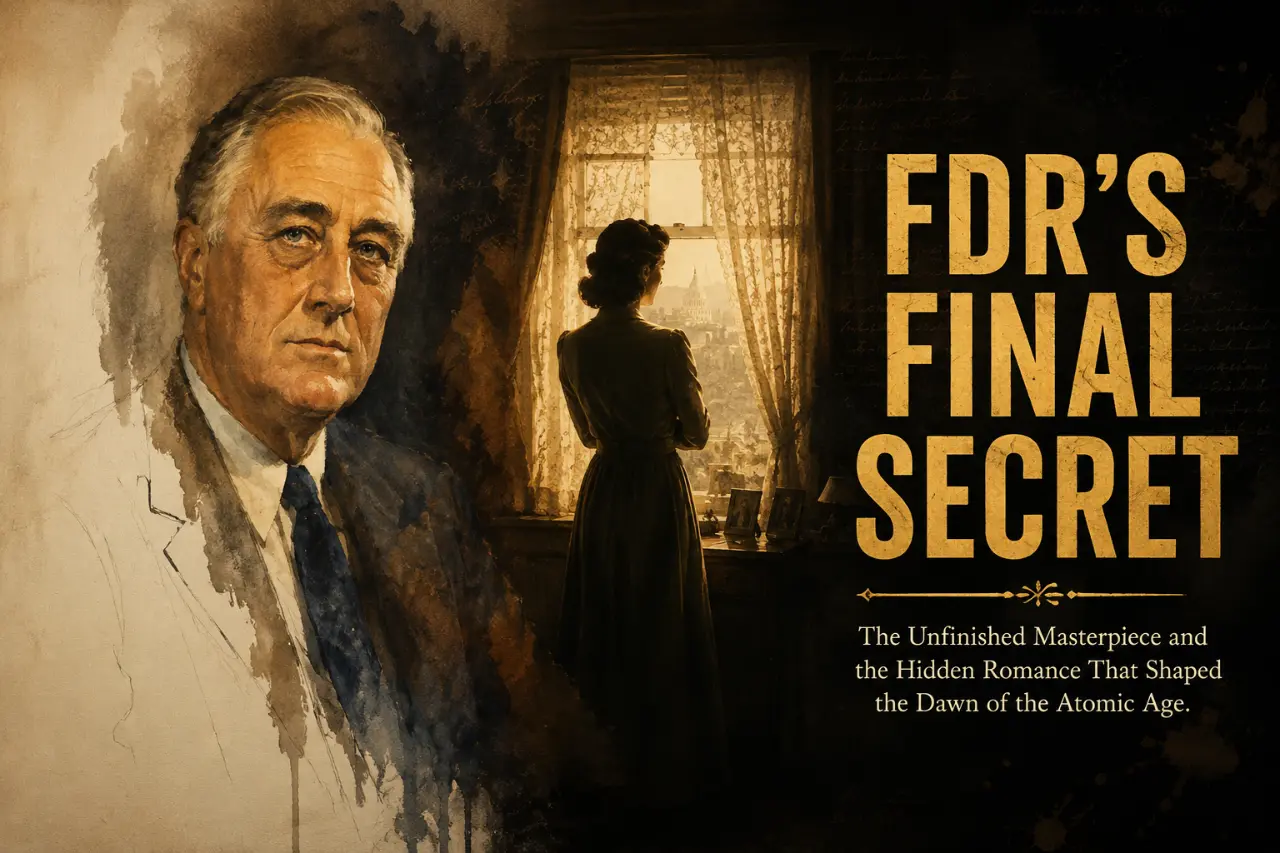
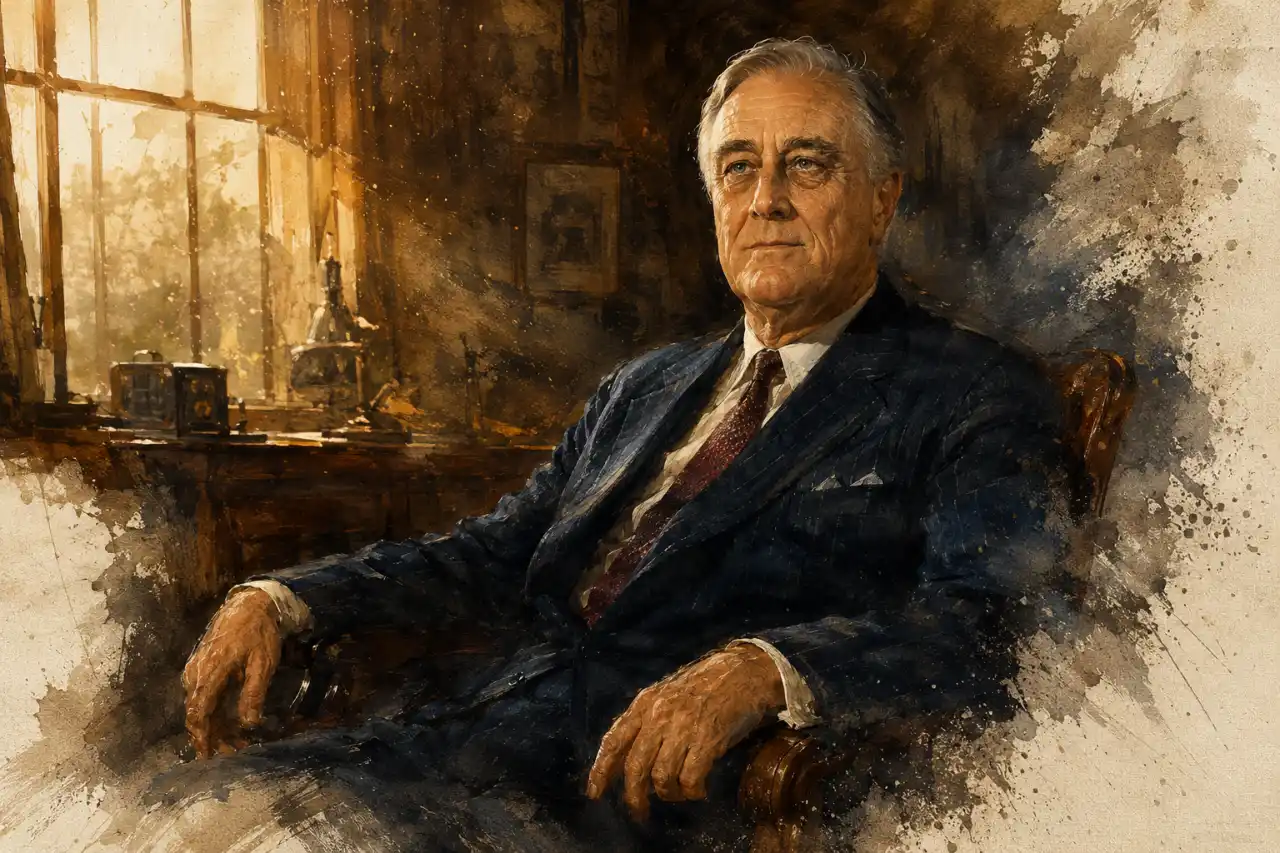
On the quiet afternoon of April 12, 1945, the world was on the edge of a massive victory, but the man who led the charge would never live to see it. Deep in the peaceful woods of Warm Springs, Georgia, inside his cherished retreat known as the Little White House, the 32nd President of the United States, Franklin D. Roosevelt, was trying to find some much-needed rest. World War II was finally reaching its closing chapter in Europe, and the total defeat of Nazi Germany was almost completely certain. However, the years of unimaginable stress had taken a severe toll on the President's health. He was quietly suffering from dangerously high blood pressure and a failing heart. On this particular spring day, the atmosphere was wonderfully calm. A famous Russian-born artist named Elizabeth Shoumatoff was sitting in front of him, carefully mixing her watercolors to paint his portrait. FDR was sitting comfortably in his chair, looking hopeful and relaxed for the future. Suddenly, right around lunchtime, the peaceful silence was broken. The President raised his hand to his head and whispered his final, haunting words: "I have a terrific headache." Moments later, he collapsed into deep unconsciousness. His personal doctor rushed into the room and quickly realized the horrifying truth. The President had suffered a massive and fatal cerebral hemorrhage, bleeding severely inside his brain. Despite all frantic medical efforts, Franklin D. Roosevelt never woke up again. At exactly 3:35 PM, the great leader was pronounced dead at the age of 63. The world was completely shocked, losing its most powerful figure just weeks before the ultimate triumph in Europe. But behind the closed doors of that Georgia cottage, a much deeper and more scandalous secret was hiding from the public eye.
The Secret Lover Who Vanished Without a Trace
The official government reports carefully crafted a story of a great leader dying surrounded by his loyal staff, but they completely erased a shocking detail: his secret lover was in the room. Present at the Little White House on that fateful day was a woman named Lucy Mercer Rutherfurd. Decades earlier, during World War I, Lucy had been the social secretary to FDR’s wife, Eleanor Roosevelt. Franklin and Lucy fell deeply in love, sparking a passionate extramarital affair that almost destroyed his political career and his marriage. When Eleanor discovered the romance in 1918, Franklin promised to cut all ties with Lucy forever to save his family and his future in politics. However, promises are often broken in the shadows of supreme power. In the final years of his life, lonely and carrying the incredible weight of a global war, FDR secretly reconnected with Lucy. Eleanor had absolutely no idea that the romance had started again. In fact, it was Lucy who had arranged for her good friend, the artist Elizabeth Shoumatoff, to travel to Georgia and paint the President. When FDR suddenly collapsed and the medical panic began, Lucy and the artist realized the devastating scandal that would explode if they were found there together. Before Eleanor or the national press could arrive, the two women quickly packed their things and fled the property. For many years, the American public remained completely blind to this hidden chapter of history. The presence of his lifelong secret love during his final moments was buried deeply, only to be uncovered decades later by historians and biographers. This revelation added a deeply human and heartbreaking layer to the legend of America's longest-serving president.
An Unfinished Masterpiece and a Changed World
When FDR took his last breath, he left behind two monumental legacies: an unfinished canvas and an utterly transformed world. The artist, Elizabeth Shoumatoff, had abandoned her watercolor painting in her desperate rush to escape the scandal. That beautiful but incomplete artwork, now famously known around the world as the "Unfinished Portrait of Franklin D. Roosevelt," still survives today. It remains frozen in time, perfectly capturing the exact moment a global era suddenly snapped in half. You can still see the masterfully painted face of the President fading into the blank, unpainted paper below his shoulders, symbolizing his suddenly interrupted life. Meanwhile, the shockwaves of his sudden death hit Washington D.C. like a terrible earthquake. Vice President Harry S. Truman, a man who had barely spent any private time with FDR and knew absolutely nothing about the government's top-secret military projects, was immediately sworn in as the 33rd President. The transition was terrifyingly fast. Within just a few weeks of taking the oath, Truman celebrated the final surrender of Germany and the end of the war in Europe. But his greatest and most terrifying challenge was still waiting in the dark. Less than four months after FDR’s passing, Truman was forced to make one of the most controversial and world-altering decisions in all of human history. To end the brutal war in the Pacific, Truman ordered the dropping of atomic bombs on the Japanese cities of Hiroshima and Nagasaki. The world was forever changed in a blinding flash of nuclear fire. The quiet death of a sick man in a small Georgia cottage not only ended a deeply personal secret romance, but it also forcefully pushed the entire human race into the terrifying dawn of the atomic age.
References
- Franklin D. Roosevelt Presidential Library and Museum Official Archives
- National Park Service Historic Records of Little White House Warm Springs
- No Ordinary Time by Doris Kearns Goodwin Pulitzer Prize Winner
- FDR's Unfinished Portrait by Elizabeth Shoumatoff Memoir
- Eleanor and Franklin by Joseph P. Lash Historical Biography
- The Hidden White House Historical Analysis by Harry S. Truman Library