The Day a Sub-$40 Wire Transfer Sparked a Near-Fatal Financial Shock
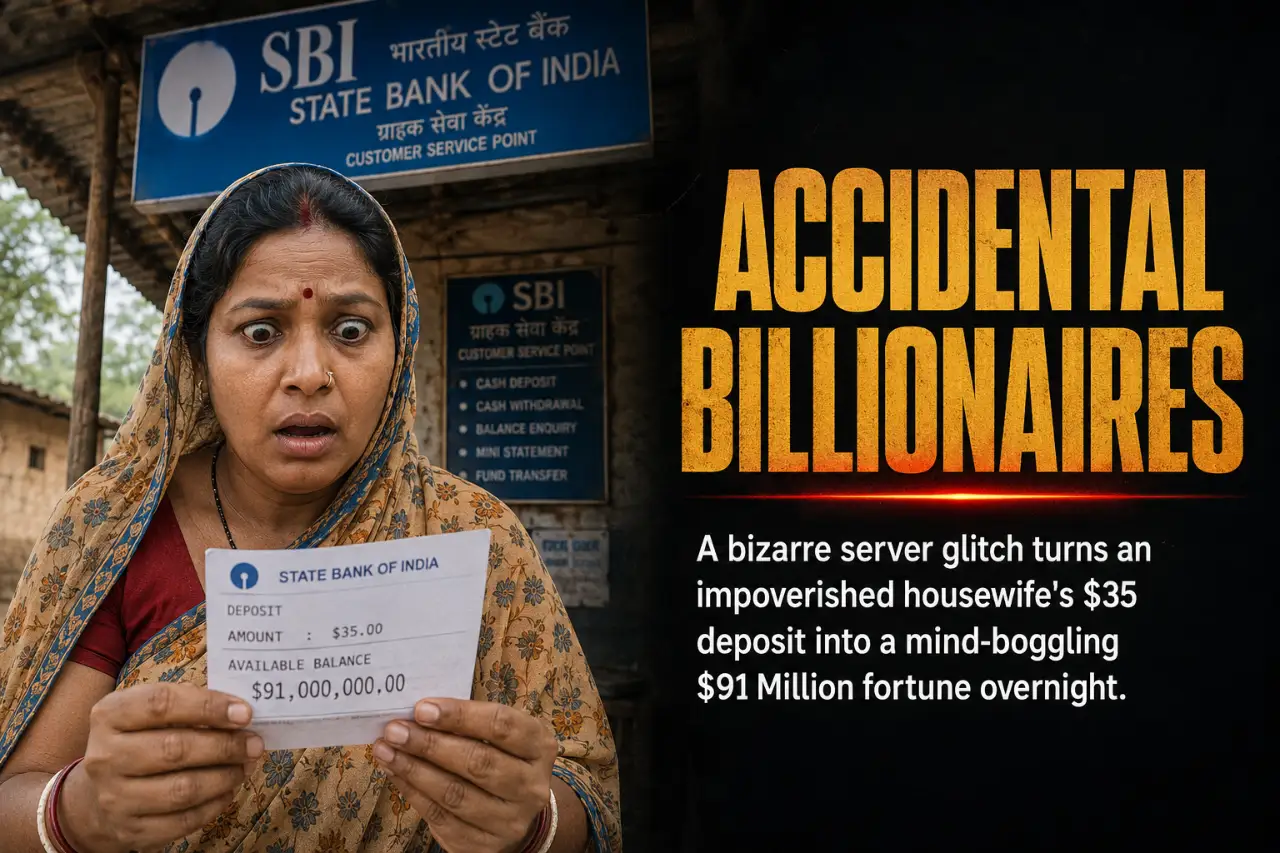
Imagine living in a remote, modest village where every single cent is fiercely calculated just to keep the kitchen fire burning. For Sherifa Khatun, a humble housewife residing in the Kalikapur village of West Bengal, India, this was the punishing reality of daily existence. Her husband and close male relatives work grueling hours as migrant laborers in the distant state of Tamil Nadu, thousands of miles away, sending meager remnants of their wages back home. On an otherwise ordinary afternoon, Sherifa’s brother-in-law transferred a modest sum of 3,000 Indian Rupees—roughly equivalent to about 32 Euros or 35 US Dollars—to her account at the state-run Central Bank of India so she could buy essential groceries. Walking down to the local banking kiosk to withdraw the tiny allowance, Sherifa requested a standard balance inquiry. When the paper receipt rolled out, the machine did not display a double-digit figure. Instead, it flashed an astronomical, eye-watering amount: 7,59,69,51,951.16 Rupees. In Western financial terms, a destitute woman who barely survives on the margins of society was suddenly looking at a staggering net worth of nearly 91 Million US Dollars or 84 Million Euros. Rather than erupting into pure euphoria, the psychological impact was immediate and terrifying. Sherifa’s hands and legs began to shake uncontrollably as sheer panic set in. In impoverished communities, unexplained wealth is rarely viewed as a blessing; it is feared as a direct ticket to corporate prosecution, police harassment, or dangerous criminal extortion. Consumed by the terrifying thought that she might be framed for an international financial crime or a money laundering conspiracy, she fled the kiosk. Driven by survival instincts, she immediately brought the baffling receipt to local community leaders and officially filed a formal report with the Lalgola Police Station, pleading with the state authorities to investigate how an ordinary citizen could inadvertently become an overnight billionaire.
Lightning Strikes Twice: The Contagious Virtual Mirage Sweeping Through Rural Communities
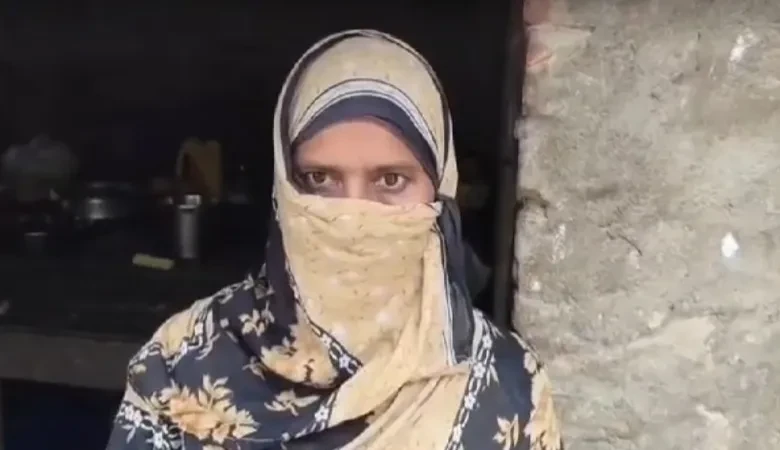
Astonishingly, Sherifa’s terrifying encounter with ghost wealth was not an isolated anomaly. On the exact same day, hundreds of kilometers away in the Alipurduar district of West Bengal, an identical economic mirage was unfolding. Another underprivileged villager, Shampa Barman, walked into a state-owned bank branch in the Dhulagaon market. Shampa was expecting to receive a tiny, crucial monthly handout from a state-sponsored welfare program known as the 'Annapurna Yojana'—a government scheme designed to provide basic food security to the most vulnerable segments of the population. When the bank representative printed out her formal financial ledger, the system generated an impossible reality: her balance stood at an unbelievable 7.4 Billion Rupees, translating to over 88 Million US Dollars. The local Jateshwar police outpost was thrown into absolute chaos as news of yet another accidental billionaire spread like wildfire across the rural province. Recognizing the profound terror and confusion griping Shampa, law enforcement officers escorted her back to the financial institution for a rigorous, secondary investigation. When the banking terminal refreshed her account for a second time, the illusion vanished into thin air. The towering millions evaporated into nothingness, leaving behind her actual, heartbreakingly small balance of just 202 Rupees—barely enough to purchase a single fast-food meal in a European city. Within hours, reports began surfacing that high school students and daily wage earners in neighboring districts like Maynaguri and Cooch Behar were witnessing the exact same ghostly phenomenon, with identical massive balances temporarily manifesting on their screens before vanishing back into the digital ether.
Decoding the Ghost Code: How Cyber Chaos and Infrastructure Vulnerabilities Weaponize Modern Banking
As global media outlets descended upon these rural towns, cyber forensic experts and senior banking executives scrambled to dissect what had caused this unprecedented wave of digital phantom wealth. The subsequent investigation revealed a fascinating, cautionary tale about the fragile nature of global digital banking infrastructure. Initial fears of a coordinated, hostile international cyber-attack or a massive money laundering network were quickly debunked by technological specialists. Instead, the entire crisis was attributed to a catastrophic server-side software glitch within the core banking system of the state-owned institution. In a bizarre twist of programming fate, the bank's internal database had suffered a critical synchronization error during a routine software update. Rather than fetching the actual monetary balances, the printing terminals and mobile applications mistakenly began displaying 10-digit transactional identification numbers, internal routing sequences, or customer phone numbers directly inside the currency column. What looked like an astronomical fortune to a frightened villager was actually nothing more than a string of technical metadata printed in the wrong place. Bank officials moved rapidly to implement emergency patches, freezing the corrupted accounts to ensure that not a single unit of this phantom money could ever be withdrawn or transferred into circulation. For Western observers, this dramatic incident serves as an eye-opening sociological study and a stark reminder of the digital divide. While tech elites in Europe and America view banking apps as seamless tools of convenience, for the world’s most vulnerable populations, a simple software coding error can instantly transform an ordinary afternoon into a psychological thriller of cinematic proportions.
References
- Aajkaal Newspaper Report July 2026 Murshidabad Lalgola Bank Incident
- ABP Ananda Television News Coverage on Sherifa Khatun Financial Glitch
- TV9 Bangla Digital Media Report on Shampa Barman 740 Crore Account Balance
- Rtv Online Bangladesh International News Section West Bengal Bank Error
- Central Bank of India Official Statement Regarding Technical Server Glitch
- Lalgola Police Station and Jateshwar Outpost Official General Diary Records