Male Sea Otters Seize Pups as Hostages to Extort Hard-Earned Food from Vulnerable Mothers During Deep Dives
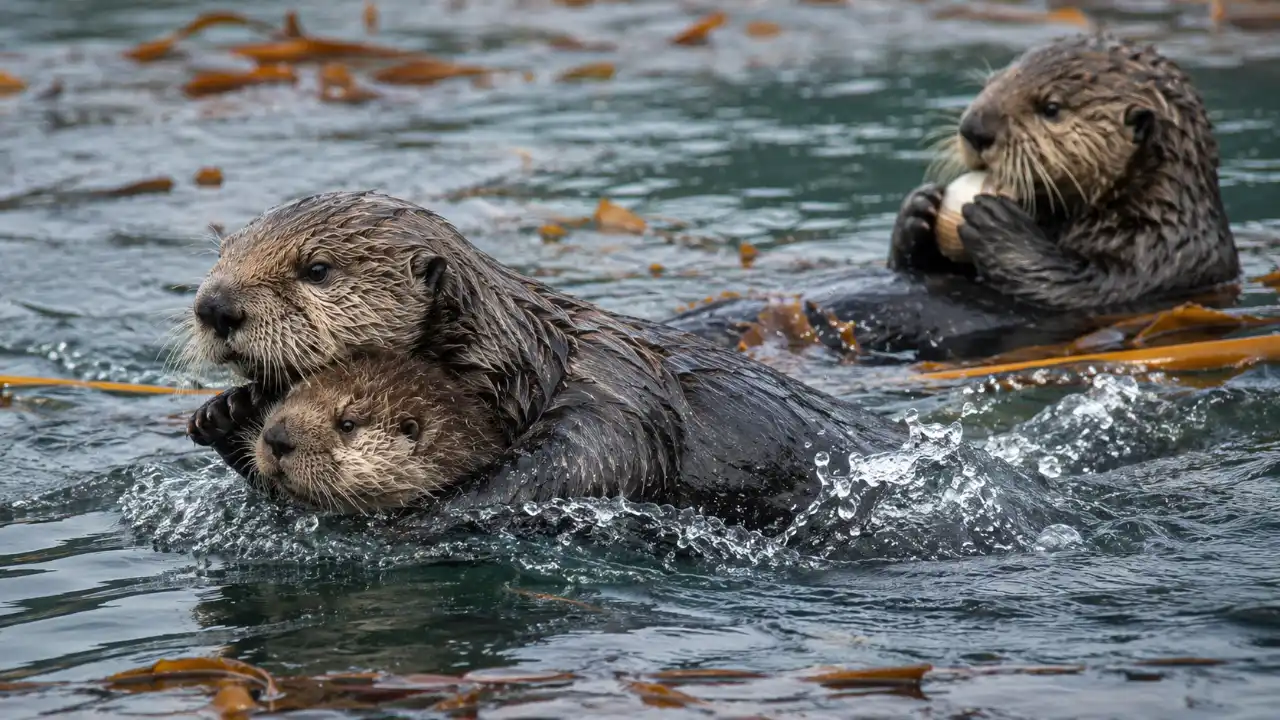
In the cold, kelp-rich waters off California’s Monterey Peninsula and parts of Alaska, a ruthless survival tactic plays out beneath the surface. A mother sea otter, her single dependent pup resting on her chest or floating nearby, dives repeatedly to the seafloor in search of high-energy prey such as clams, sea urchins, crabs, snails, and occasionally fish. These dives are essential; sea otters must consume up to 25 percent of their body weight daily to fuel their high metabolism and maintain body heat in frigid waters. While the mother is submerged and focused on prying open shells with her dexterous forepaws or using rocks as tools, an adult male slips in. He grabs the unrelated pup, gripping it tightly with his forepaws and teeth, sometimes forcing it underwater in a manner that causes the young otter to panic and emit distress calls audible above the surface. The mother, surfacing with her catch clutched to her chest, immediately senses the threat. To secure her pup’s release, she relinquishes the food she has labored to obtain. The male consumes the meal on the spot and often lets the pup go, though the mother and offspring depart quickly and stressed. This “hostage behavior,” as researchers term it, transforms the pup into leverage. The mother, already expending enormous energy to forage and nurse, faces a calculated extortion that exploits her protective instincts. Observations show the male does not always need to hold the pup for long; the mere threat and the pup’s visible distress suffice to prompt the handover. This occurs most often when the mother is in the male’s territory, where he patrols and rests while monitoring females with pups. The tactic is not random violence but a deliberate strategy that allows the male to obtain nutrition without the full cost of foraging himself. In documented cases, males have been seen repeating the approach during a single foraging bout, capitalizing on the mother’s repeated dives. The pup, typically too young to forage independently, becomes an unwitting pawn in this resource contest. Field biologists note that while the pup is usually released unharmed after the exchange, the repeated stress and occasional rough handling can affect its condition. This behavior underscores the intense competition for food in sea otter populations, where individuals specialize in particular prey types and where territorial males frequently target mother-pup pairs because females with dependent young are predictable foragers in specific areas. The entire sequence reveals a level of social manipulation rarely recorded in marine mammals, where one individual directly uses another’s offspring as currency for immediate gain.
Decades of Peer-Reviewed Field Studies Rigorously Document Hostage Behavior in Territorial Males Across Distinct Populations
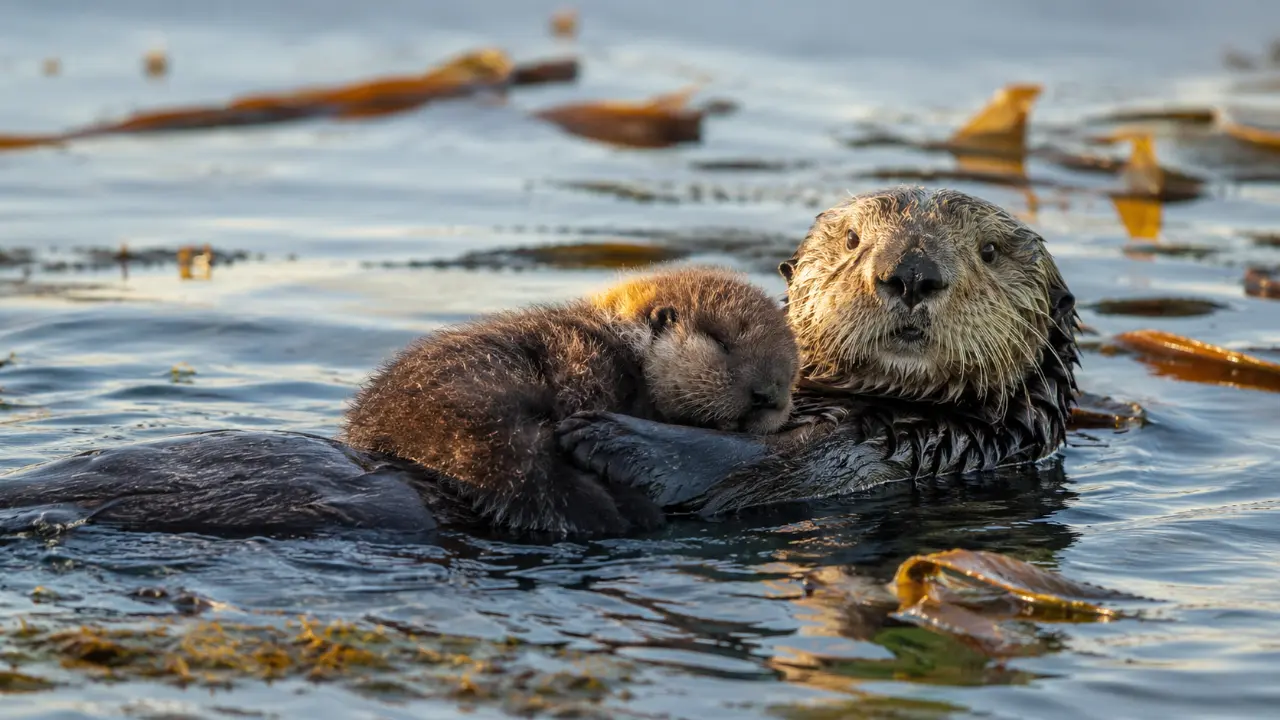
The hostage tactic is not anecdotal folklore but a behavior systematically recorded by marine mammalogists over multiple decades and locations. The foundational description appears in the comprehensive 1990 monograph by Marianne Riedman and James Estes, published by the U.S. Fish and Wildlife Service as Biological Report 90(14). In that work, the authors detail observations from nine years of studying tagged sea otters in Monterey Bay, California. They explicitly name the strategy “hostage behavior” and state that a male approaches and grabs a dependent pup while its mother is foraging underwater, relinquishing the pup only when the mother provides her prey in apparent exchange. The report notes that many such incidents were observed and that territorial males commonly steal prey from mother-pup pairs within their defended areas, with females usually relinquishing food with little resistance. This pattern fits into a broader picture of food theft in sea otters, where males obtain a significant portion of their diet by exploiting others rather than foraging exclusively themselves. Complementing the California data, a 2005 study by Heather Pearson and Randall Davis examined territorial male behavior in Simpson Bay, Prince William Sound, Alaska. Researchers recorded a specific aggressive encounter in which a male approached a pup floating on the surface while its mother dove for food, forced the pup underwater as though attempting to submerge it, and then seized the clam the mother brought up upon surfacing. The authors directly reference the earlier Riedman and Estes work, confirming the behavior matches the “hostage behavior” category because the male withholds the pup until the female yields her catch. Additional corroboration comes from a 1994 New Scientist article that drew on the same long-term Monterey observations, describing how males swim to a pup during the mother’s dive, snatch the pup, and hold it hostage until the mother surrenders her food. Popular summaries on sites such as riverotterecology.org echo these scientific accounts, noting that some adult males go to the extreme of employing hostage behavior while mothers dive. Importantly, the behavior is not exhibited by every male. It appears concentrated among certain territorial individuals who maintain areas overlapping high densities of females and pups. These males invest time in patrolling boundaries and forming temporary consortships with females, creating repeated opportunities for such interactions. The tactic is described as an “interesting male strategy” rather than a universal species trait, occurring under specific conditions when the mother is most vulnerable—mid-dive and unable to immediately protect her offspring. Across both California and Alaska studies, the pattern holds: males target unrelated pups, apply physical restraint or submersion to induce distress, and secure food transfers. Females with pups represent reliable targets because they must forage intensively to support both themselves and their dependent young, making them more predictable and less able to evade or fight back effectively. These rigorous, multi-year field studies involving photo-identification, focal sampling, and tagged animals provide the empirical backbone confirming that the hostage exchange is a real, repeatable component of sea otter social ecology rather than isolated anomaly.
Hostage Tactic Doubles as Strategic Access Point for Mating While Highlighting Extreme Aggression in Sea Otter Courtship
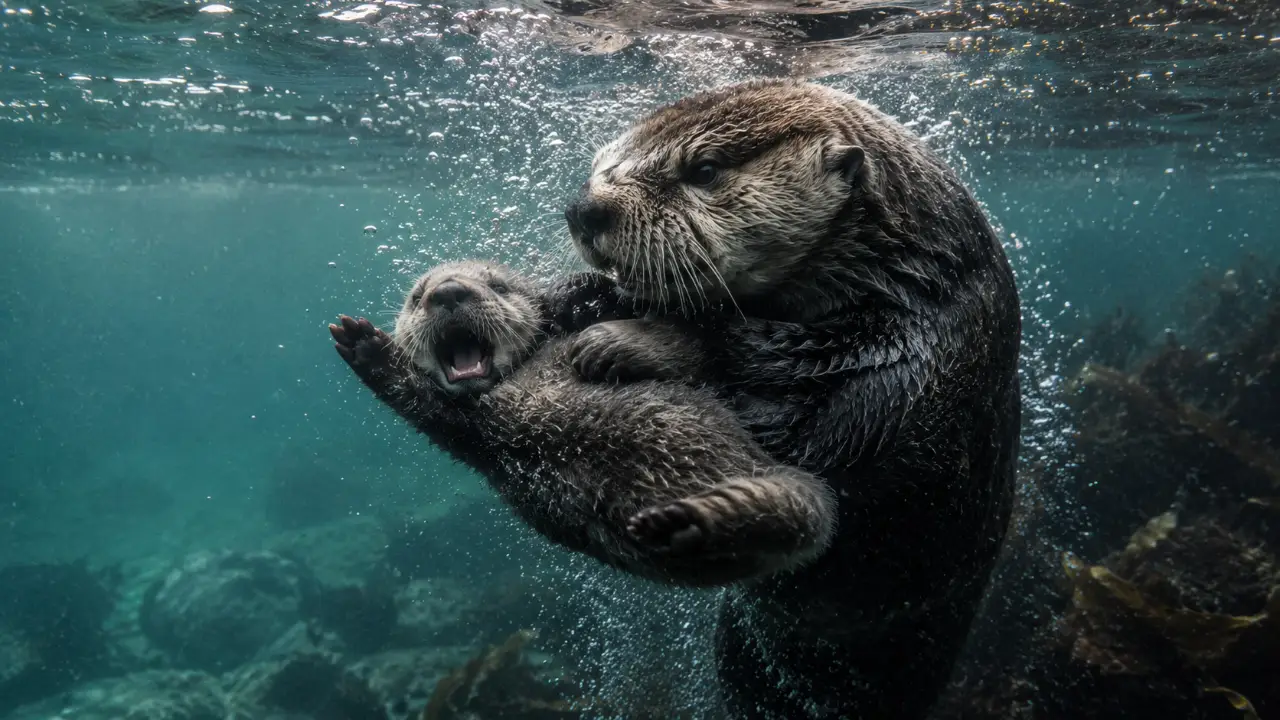
Beyond immediate caloric gain, the hostage approach frequently positions territorial males in close proximity to mothers, creating openings for mating attempts in a species where reproduction is highly competitive and often coercive. Sea otters exhibit a polygynous mating system in which dominant males defend territories that encompass female ranges. These males form consortships with receptive or even non-receptive females, including those accompanied by pups, sometimes lasting several days to weeks. By seizing the pup and forcing the mother to interact directly, the male maintains physical closeness at a moment when the female’s attention is divided between rescuing her offspring and escaping. Field footage from specialized underwater camera systems, including sequences captured during productions such as those by John Downer Productions featuring spy technology, has recorded dominant males attempting to kidnap pups precisely in contexts where mating access appears to be the secondary objective. Narration and observation notes from these documented encounters indicate the male may be using the hostage situation to remain near the mother and increase chances of copulation once the immediate food exchange concludes. This aligns with broader patterns of aggressive courtship documented across sea otter populations. Males typically approach females from behind, grasp the face or nose with teeth and forepaws, and may hold the female’s head underwater during prolonged intromission. Such encounters frequently leave females with scarred or damaged noses and, in extreme cases, can result in drowning. The 1990 Riedman and Estes report and subsequent studies note that resident males sometimes disturb resting females with pups specifically to initiate mating activity alongside food theft. The hostage tactic therefore serves a dual function: securing nutrition while simultaneously advancing reproductive opportunities by exploiting the mother’s compromised state. Related observations reveal even more extreme expressions of this aggression. Separate research, including a 2010 study published by the U.S. Geological Survey on interspecific sexual behavior, documented male southern sea otters harassing, dragging, and attempting copulation with juvenile harbor seal pups, sometimes guarding carcasses for days. While distinct from the otter-on-otter hostage behavior, these incidents illustrate the same underlying pattern of males using physical dominance and opportunistic proximity to pursue mating regardless of species or age. In the context of sea otter society, where food resources are patchily distributed and male reproductive success depends on controlling access to multiple females, the hostage strategy emerges as an efficient, low-cost mechanism for both sustenance and sexual access. It exploits the mother’s obligatory investment in her pup and her need to resume foraging quickly. Researchers emphasize that only a subset of males employ this extreme version; most territorial males rely on simpler food theft or consortship formation. Yet the documented cases across California’s Monterey Peninsula and Alaska’s Prince William Sound demonstrate that when conditions align—mother diving, pup accessible, male in territory—the tactic reliably yields both food and potential mating advantage. This behavior, while unsettling to human observers accustomed to viewing sea otters as playful icons, reflects the raw selective pressures shaping one of the ocean’s most specialized marine mammals. It stands as a stark reminder that survival and reproduction in the wild often involve calculated exploitation even within the same species.